
Published: March 4th, 2026
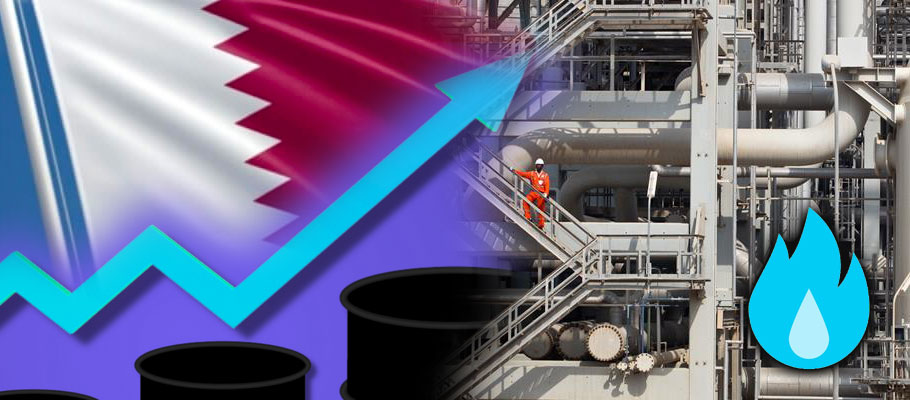
The pound slipped and European gas prices surged after Qatar suspended production at its main liquefied natural gas (LNG) facility this Tuesday, following what Doha described as an Iranian drone attack. The move disrupted roughly a fifth of global LNG supply and sent benchmark futures sharply higher.
European gas prices jumped more than 50% in volatile trading. UK natural gas for April delivery climbed to £121 per therm, its highest since December 2022 when the Ukraine conflict convulsed energy markets. Tanker traffic through the Strait of Hormuz, the narrow channel which most of the Gulf's energy exports pass through, had already slowed to a trickle.
For Britain the implications are immediate. As a net energy importer, higher wholesale gas prices filter into household bills and business costs with a lag, threatening to reverse the recent decline in inflation. That complicates the Bank of England's efforts to ease monetary policy and revive anaemic growth.
Markets initially steadied on hopes that the disruption would prove short-lived. But as energy infrastructure across the region remains under threat, equity markets have faltered and the pound has resumed its decline.
Britain is no stranger to energy shocks. The 2022 surge in gas prices exposed a fragile system reliant on imports and left the Treasury underwriting vast subsidies to shield households. The latest disruption threatens a smaller, but still unwelcome, deja vu.
Qatar accounted for roughly 18.8% of global LNG exports last year. Its Ras Laffan complex, the world's largest LNG export facility, is central to that trade. When such a hub goes offline, even temporarily, the global market tightens abruptly. LNG cargoes are mobile but finite; if one source falters, buyers bid up supplies elsewhere.
Europe, having reduced its reliance on Russian pipeline gas, is now structurally more dependent on LNG imports. Britain, connected to continental markets and exposed to global pricing, cannot insulate itself. As Qatar steps back, competition for alternative cargoes intensifies, lifting prices for all.
Experts at the Oxford Institute for Energy Studies told Bloomberg that the loss of Middle Eastern LNG could echo the shock that followed Russia's invasion of Ukraine. The comparison is not exact. European storage levels are healthier and demand growth is subdued, but the direction of travel is clear.
Threadneedle Street had reason to believe that inflation was finally settling. Headline consumer-price growth has drifted closer to its 2% target, and policymakers had signalled cautious openness to rate cuts later this year. That optimism now looks fragile.
Pantheon Macroeconomics notes that much depends on duration. If gas prices retreat quickly, the impact on inflation could be limited. Energy markets are notoriously prone to overshooting, only to correct once the immediate panic subsides.
But a sustained spike would alter the outlook materially. Pantheon estimates that inflation could bottom out at 2.4% this summer before climbing back above 3% in early 2027 if elevated energy prices persist. In such a scenario, the Monetary Policy Committee would struggle to justify easing policy.
The timing is awkward for the UK Treasury. Public finances were already strained before the latest shock and debt servicing costs remain high, reflecting both elevated interest rates and the legacy of pandemic-era borrowing.
Chancellor Rachel Reeves has sought to reassure investors that Britain's fiscal trajectory is sustainable. But analysts have repeatedly flagged GBP's vulnerability to any renewed loss of confidence in the government's ability to stabilise debt. An energy-driven inflation shock would worsen the arithmetic: higher borrowing costs, weaker growth and potential pressure for renewed support to households.
The political memory of soaring energy bills is still fresh and any hint of another large-scale subsidy scheme would rattle gilt markets. For now, such measures are hypothetical. But the risk premium attached to British assets could widen if the conflict drags on.
The economic shock may be compounded by developments in maritime insurance. More than half of the world's largest shipping insurers are expected to withdraw war-risk cover for vessels entering the Persian Gulf later this week. Without such cover, shipping through the region becomes prohibitively expensive.
The Strait of Hormuz is a narrow choke-point between Iran and the Arabian Peninsula. A significant share of the world's oil and LNG passes through it. Even threats to shipping can disrupt trade, as insurers and shipowners reassess risks.
Iran's Revolutionary Guards have indicated that vessels transiting the strait could be targeted. Whether such threats are carried out is almost secondary; the mere possibility deters traffic. Markets, which had hoped for a swift de-escalation, are now recalibrating.
Energy shocks tend to strengthen the dollar. Oil and gas are priced in dollars; rising prices increase global demand for the currency. In periods of geopolitical stress, the dollar also benefits from its safe-haven status.
The result has been renewed pressure on Sterling. GBP/USD slipped towards 1.33 as oil and gas prices climbed. Against the euro, the pound has tracked broader risk sentiment, moving in tandem with global equity indices.
The pattern underscores the Pound's hybrid character. It is neither a classic safe-haven currency nor a high-yield outlier. Instead, it oscillates with global risk appetite and domestic fundamentals. When energy prices surge and growth prospects dim, it tends to weaken.
Britain's exposure to global energy markets is not new. North Sea output has declined over decades, and domestic storage capacity is limited. Policymakers have debated strategies ranging from expanded renewables to new nuclear capacity and greater interconnection with Europe. Progress has been uneven.
In the short term, however, structural reform offers little comfort. Wholesale gas prices set the tone, and Britain must pay what the market demands. As supplies tighten, costs rise. The pound's weakness is therefore less a verdict on British policy than a reflection of geography and trade. An island nation reliant on imported fuel is inherently sensitive to shocks in the Gulf.


