
Published: December 3rd, 2025
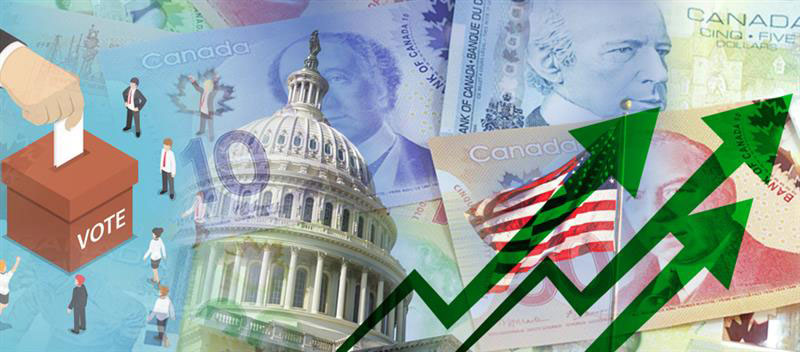
The Loonie got a much-needed boost this week after the Liberal government of Prime Minister Mark Carney scraped a narrow confidence vote tied to its federal budget. In otherwise subdued markets, the Canadian Dollar has been one of the G10's top performers, though the uptick has been driven less by enthusiasm for fiscal plans than relief over an end to political uncertainty.
The budget squeaked through, confirmed by a single vote in the House of Commons. That removed the immediate threat of a snap election and prompted foreign-exchange desks to conduct a modest repricing. As one Canadian bank put it, the currency has been “an outperformer in G10” since the budget passed. The shift has been slight, USD/CAD dipped by 0.16 to around 1.4033, but tangible.
Canada's fall budget finally sets out the fiscal contours that investors have been waiting to see. It projects a deficit of C$78.3bn, the second-largest on record, and C$141.4bn in new spending over five years. The priorities are housing, infrastructure, defence and productivity.
After weeks of speculation about a potential defeat on a confidence motion, markets now have firm figures to anchor expectations. That alone removes a discount that had built up as investors priced the possibility of political upheaval.
The budget's blend of investment and restraint is hardly a recipe for currency strength, but it is credible enough to avert concerns about downgrades or a jolt in bond yields.
A note from RBC said that with USD/CAD having held above 1.40 for most of the month, the threshold remains a sturdy support level. Renewed firmness in the Loonie reflects the disappearance of one risk, not the emergence of brighter prospects.
Canada's economic outlook is still mixed. Several forex desks expect USD/CAD to trade narrowly around the 1.40–1.4050 range.
Fresh data have delivered a second jolt to traders' assumptions. GDP figures released last Friday (28 Nov) revealed annualized growth of 2.6%, far outpacing expectations for a meagre 0.5%. The headline startled markets that had anticipated little drama; positions were skewed towards caution, and the upside shock reverberated across the currency complex.
The Loonie jumped. Sterling fell 0.56% against it, slipping to 1.8468. The Euro weakened by a similar margin to 1.6177. Most notably, USD/CAD broke below its much-watched 1.40 support level, trading near 1.3969.
The details were uneven. Monthly GDP for September rose 0.2%, roughly in line with expectations, though underlying components showed the kind of volatility that has characterised Canada's trade-exposed sectors. Economists note that large swings on the trade side make the quarterly profile “noisy”, but the latest print nonetheless bolsters the view that the Bank of Canada will keep rates on hold at its next meeting.
The broader picture is one of stabilization. Canada has endured a difficult year, burdened by its dependence on American demand and by sector-specific U.S. tariffs that have weighed on vehicles, metals and other industrial exports. Yet most goods — around 86% of exports as of August — continue to cross the border duty-free. Some analysts argue that this resilience is becoming more visible in the data, and that the period of aggressive rate cuts by the central bank has done its job. Further reductions are not the base case.
Taken together, the return of modest growth, the proximity of the end of the easing cycle and a calmer trade environment give the currency a sturdier footing than it enjoyed a few months ago. The latest surge in CAD is more than a blip, though perhaps less than a renewal.
A recent analysis by Barclays suggests that a more durable turn may be underway. The bank argues that Canada's economy appears to be regaining its footing after a year of strain. The Loonie, an underperformer relative to its commodity-currency peers, may now be poised for a period of outperformance.
Demand-side indicators have brightened, from surveys to retail sales. Third-quarter GDP, despite its distortions, underscores the likelihood that the worst has passed. Global trade tensions, while hardly resolved, have softened at the margins. And the fiscal stance, expansionary in the near term but followed by a consolidation path, offers stimulus without signalling recklessness.
Just as important is the earlier monetary loosening. Although rate cuts risk weakening the currency, the accumulated stimulus is expected to support growth into 2026, strengthening the fundamental backdrop for the loonie. The argument is not that Canada has suddenly become a star performer, but that it now compares less unfavourably with its peers.
Still, trade negotiations with the United States remain on ice, complicated by a political spat in Ontario. A more durable currency recovery will require progress on this front. Some strategists caution that without at least a temporary truce, investors may hesitate to re-rate the currency meaningfully upward.
Barclays calls a modest rebound in its base case. With the Bank of Canada nearing the end of its cutting cycle and political uncertainty reduced, the path of least resistance appears to tilt towards gradual appreciation — albeit with the usual conditionality attached. In foreign exchange, nothing is guaranteed except volatility.
CAD's recent gains, then, rest on three pillars: a government that has survived a confidence vote; a budget that, though expansive, sets a coherent five-year course; and an economy exhibiting faint signs of revival. None alone would have moved the dial much. Combined, they have been enough to shift sentiment in a market that had become dour.
Enthusiasm remains contained. Canada's challenges include a fractious political environment, exposure to American trade whims, and a recovery still in its early stages. Even with sturdier sentiment, the economy is not racing ahead. And while the budget removes one source of uncertainty, it introduces another: whether Ottawa can deliver the promised consolidation without political backlash.
For now, investors seem content with the clarity they have been given. The Loonie has room to breathe, if not to soar.


